Adana TechnologiesLABS
HEALTHLive demo

CognitiveHealthReady

Risk indicators for PTSD, depression and cognitive decline in veterans, explained point by point.

CognitiveHealthReady reads what was said in a screening conversation, shows the signals it found and why each point was given, and tracks whether follow-up happened on time.

Research demonstration on synthetic data. Not a medical device and not a diagnosis. If you’re a veteran in crisis, call 988 and press 1, or text 838255. Anyone else in the US can call or text 988.
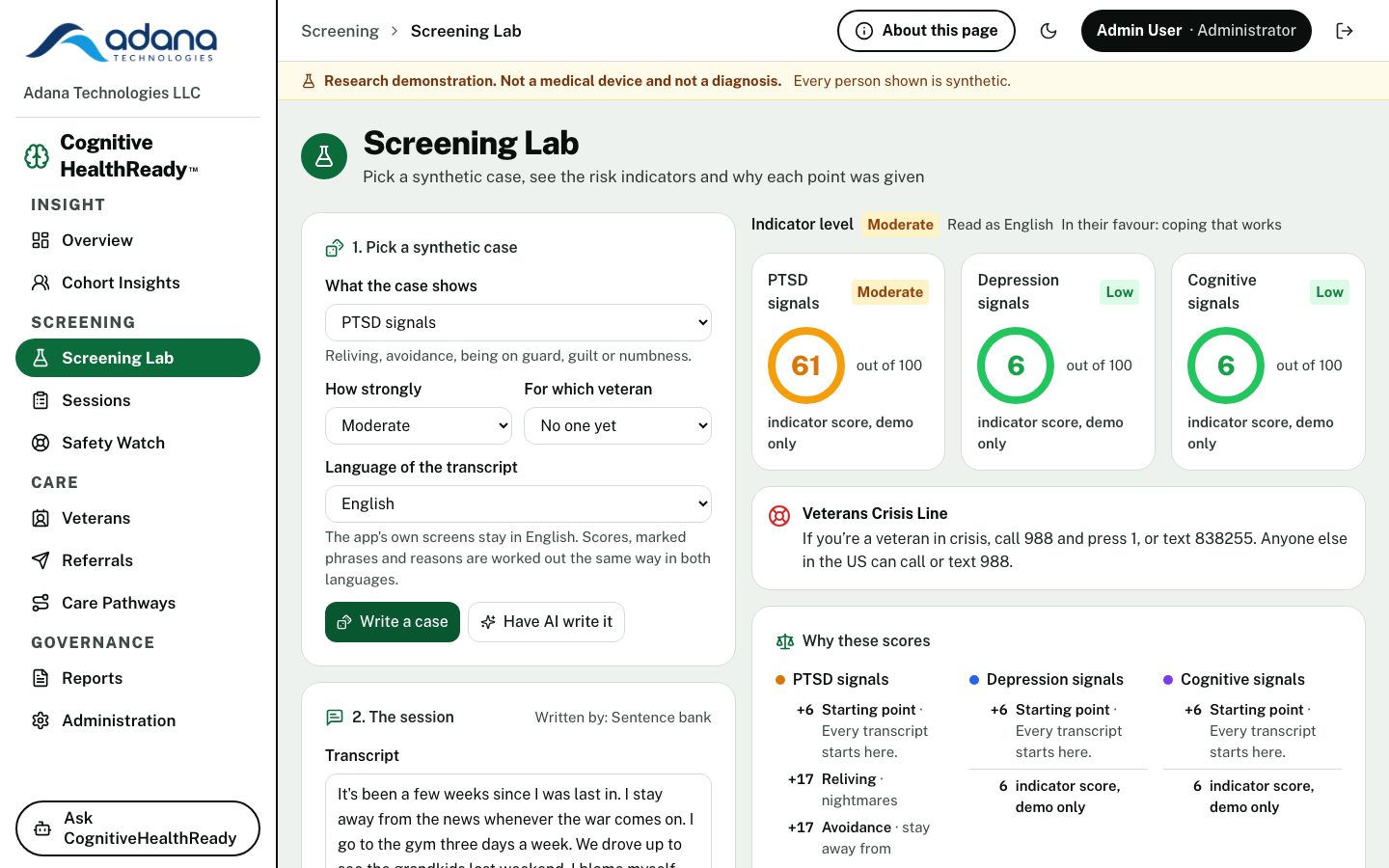
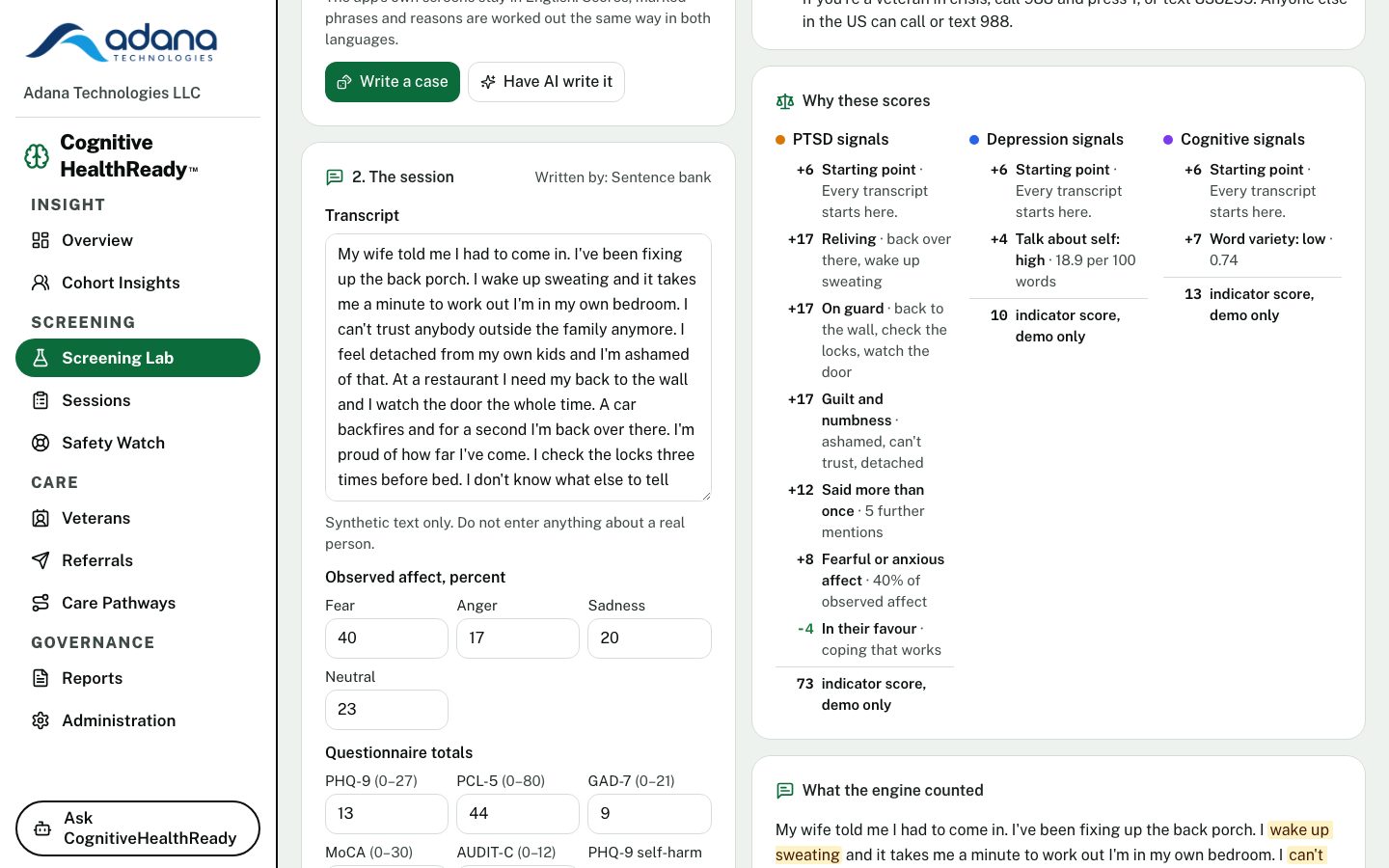
Screening Lab showing PTSD, depression and cognitive indicator scores for a synthetic case

THE PROBLEM

The signals are in the conversation. Follow-up is where they get lost.

Early signs of trauma, low mood and memory trouble often show up in what a veteran says, well before a referral is made.

A score with no explanation is hard to trust, and hard for a reviewer to correct.

And a flag only helps if someone follows up: the contact, the referral and the next step all have to happen on time.

HOW IT WORKS

From a conversation to follow-through in three steps

  1. 01

    Read

    A transcript is scored from 0 to 100 for PTSD, depression and cognitive signals, in English or Spanish.

  2. 02

    Explain

    Every point is tied to the phrase that earned it, and a reviewer confirms the scores or enters their own with a note.

  3. 03

    Follow through

    Safety flags, referrals and care pathway steps are tracked against target dates, so nothing waits unseen.

INSIDE THE PILOT

What you see in the demo

01

See why each point was given

Each score is broken down phrase by phrase, so a reviewer can check the reasoning instead of trusting a number.

The reasons behind each indicator score, listed point by point

02

Patterns across the cohort

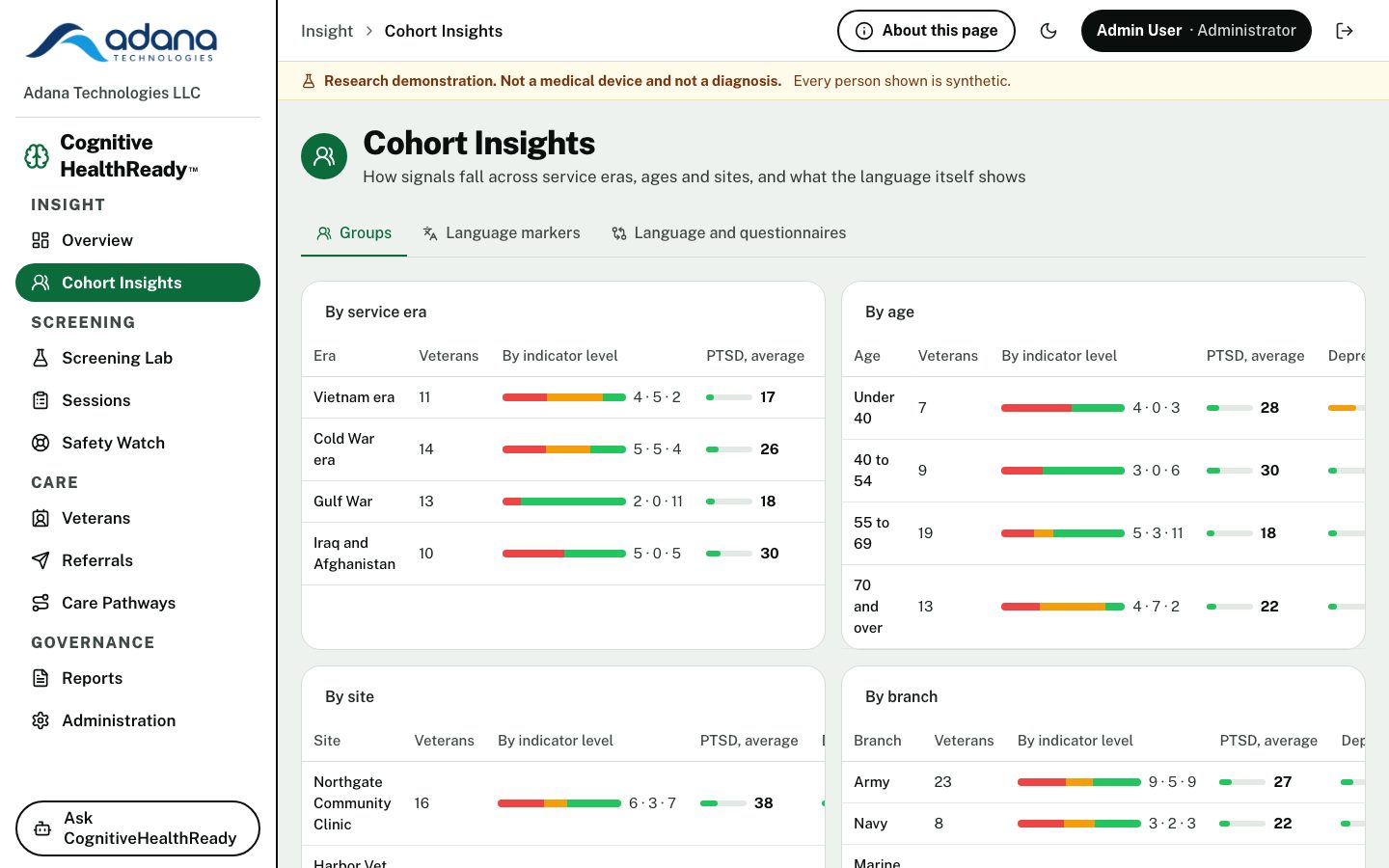
How signals fall across service eras, ages, sites and branches, shown in aggregate.

Cohort Insights tables by service era, age, site and branch

03

Standard steps for each kind of concern

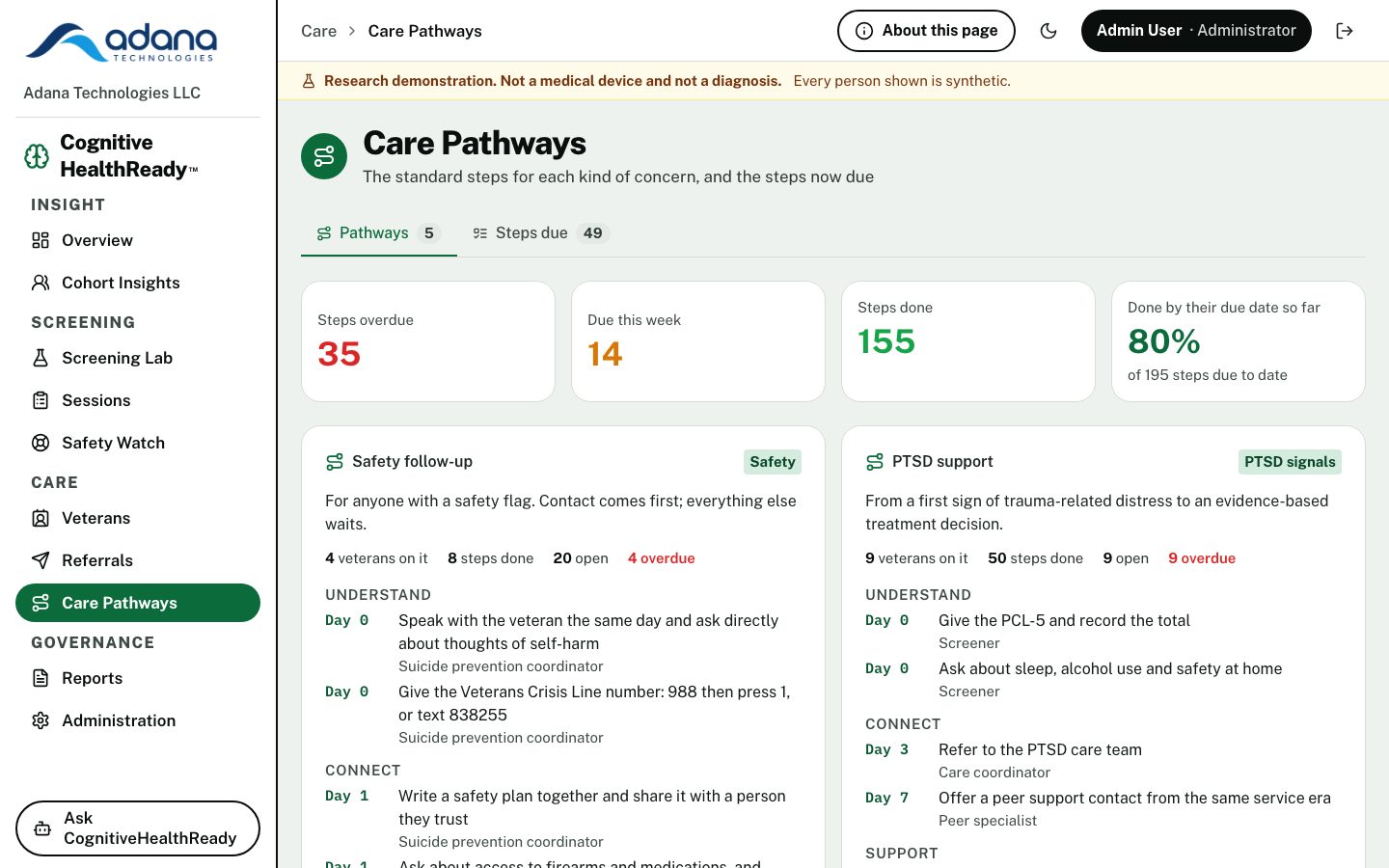
Care pathways set out who does what by which day, and show the steps that are due or overdue.

Care Pathways page with the safety follow-up and PTSD support pathways

04

A written summary for the program

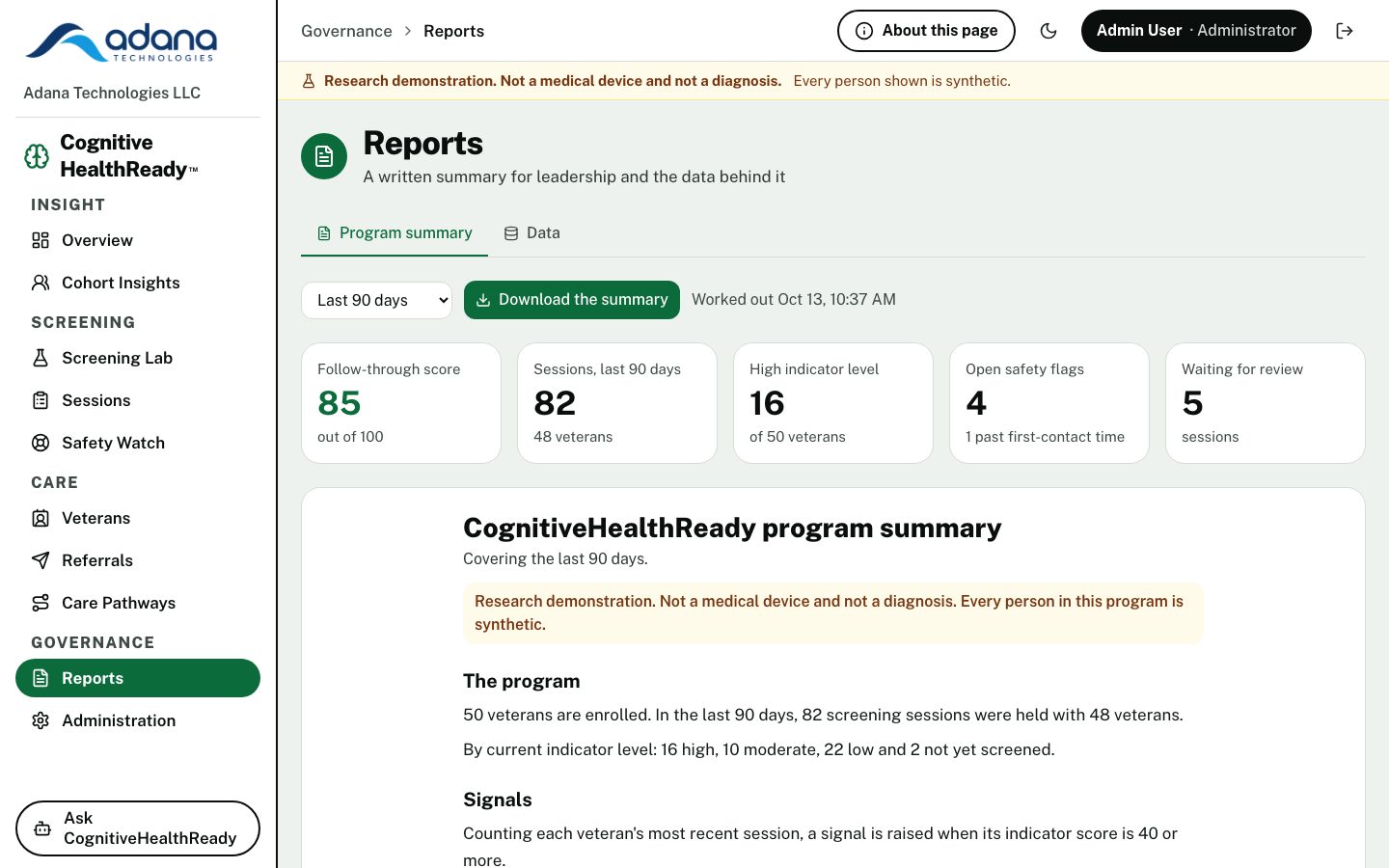
Sessions, safety contacts, referrals and follow-through for the period, ready to download.

Reports page with the program summary

WHO IT IS FOR

Built for programs that serve veterans

Program directors

One view of who needs attention, what is waiting, and whether follow-up is on time.

Screeners and reviewers

Signals explained point by point, with a person confirming or correcting every score.

Care coordinators

Referrals and pathway steps tracked to their target dates.

UNDER THE HOOD

Production-grade, even as a pilot

  • Isolated container on AWS. Runs on its own, behind a shared load balancer.
  • HTTPS only. Every connection is encrypted with a managed certificate.
  • Secrets in a vault. Keys live in AWS Secrets Manager, never in code.
  • Synthetic data only. Every person shown is invented, and the data resets on every restart.

QUESTIONS

Before you ask

Is this a medical device?

No. It is a research demonstration. Its scores are indicators, not a diagnosis, and every score is meant to be reviewed by a person.

Does the demo use real data?

No. Every person, transcript and session is synthetic. Nothing is recorded from a real person, and the pilot takes in no audio, video or photos.

Is this a finished product?

It is a working pilot: a real application you can use, scoped to show the approach. A full engagement adapts it to your systems, data and reporting needs.

How do I get into the live demo?

Request a demo and we will send sign-in details, or walk you through it on a short call.

Can it run inside our environment?

Yes. Every pilot is a self-contained container, so it can be deployed in your own cloud account or data center.

See CognitiveHealthReady with your program

A 30-minute walkthrough, with the questions that matter to your organization.